- Jan 14, 2025
The Triangle of Airworthiness: Safety, Reliability, and Quality
- David Lapesa Barrera
At its core, airworthiness is the condition that ensures an aircraft is fit for safe flight. It ensures that an aircraft and its components are designed, maintained, and operated to meet strict safety, reliability, and quality standards. Without it, aviation simply cannot function safely.
But airworthiness is more than just compliance; it’s a dynamic process requiring constant vigilance, innovation, and balance. This is where the Triangle of Airworthiness comes in—a framework that simplifies the complexities of maintaining airworthiness into three interdependent elements: Safety, Reliability, and Quality.
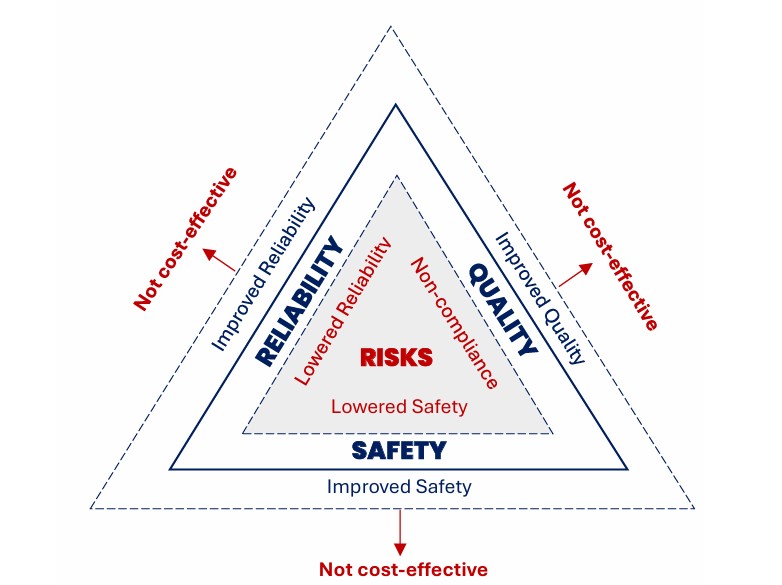
First introduced in Aircraft Maintenance Programs (Springer, 2022), the Triangle of Airworthiness provides actionable insights into managing these critical components effectively.
Breaking Down the Triangle
The Triangle of Airworthiness represents the interplay between three essential elements that keep aircraft in a safe and serviceable condition. Let’s explore each side:
Safety: Safety refers to reduce the possibility of harming persons or damage property to a level that is acceptable. Guided by international standards like ICAO’s Safety Management Systems (SMS) and State Safety Programs (SSP), safety requires a culture of openness, effective occurrence reporting systems, and robust investigation practices. Today, safety also includes protecting the digital systems that support aircraft operations. Cyber threats can impact aircraft safety, so managing information security is now a key part of airworthiness.
Reliability: This side focuses on ensuring that aircraft and components consistently perform their intended functions as per design specifications. Reliability is preserved through effective maintenance programs, which are built to maintain the inherent reliability established during the design phase. Continuous monitoring and proactive adjustments to maintenance schedules ensure aircraft remain operationally reliable without excessive downtime or cost. Inherent reliability can only be directly enhanced through redesign, but reliability performance can be improved through well-managed processes, such as preventive maintenance and operational optimization.
Quality: Beyond meeting regulatory requirements, quality ensures processes are optimized for efficiency and effectiveness. Organizations with strong compliance monitoring and quality management functions set themselves apart by fostering continuous improvement and operational resilience.
When these three elements are in harmony, airworthiness is not only achieved but also sustained at a cost-effective level. Disruption in any one area, however, introduces risks that compromise safety and operational success.
Balancing Airworthiness: A Practical Approach
The Triangle of Airworthiness is more than just a theoretical model; it’s a tool for proactive decision-making. For instance:
Safety Management is fundamentally focused on the prevention of hazards and ensuring the protection of crew, passengers, and assets. By identifying potential risks early, implementing effective safety protocols, and fostering a safety culture, safety management not only reduces the likelihood of safety incidents but also contributes to reliability. It minimizes unplanned maintenance and downtime by preventing failures, while also supporting quality by ensuring that safety measures are integrated into all operational and maintenance processes.
Reliability Programs ensures that aircraft and components consistently perform as intended, with minimal failures or deviations from expected performance. Effective Reliability Programs support safety by identifying hazards and mitigating risks that could lead to safety incidents. Additionally, these programs contribute to quality by ensuring that maintenance, design, and operational practices adhere to rigorous standards, preventing defects and improving the overall performance of the aircraft.
Quality Processes focuses on maintaining consistent standards and identifying compliance issues early before they escalate into significant problems. This ensures that airworthiness processes consistently meet regulatory requirements and performance expectations.
Continuous Improvement keeps the triangle strong by identifying risks, refining processes, and making airworthiness safer, more reliable, and cost-effective over time.
These elements are interlinked, and when aligned, they strengthen each other to create a robust airworthiness framework. However, neglecting or misaligning one area can trigger a cascade of risks, affecting the overall safety, reliability, and quality of operations.
The concepts behind the Triangle of Airworthiness are fundamental to modern continuing airworthiness management. Understanding how safety, reliability, and quality interact helps organizations maintain aircraft in a safe, reliable, and cost-effective condition throughout their operational life.
Learn more about airworthiness and maintenance programs →
Author
David Lapesa Barrera is the founder of The Lean Airline® and author of The Lean Airline: Flight Excellence and Aircraft Maintenance Programs. His work focuses on lean management, operational excellence, and continuing airworthiness.