- Jul 29, 2025
Beyond Compliance: Managing Emergency Equipment Effectively
- David Lapesa Barrera
Every aircraft carries safety and emergency equipment. It’s required by regulation, yes—but more importantly, it’s essential for the protection of everyone on board. From life vests to oxygen bottles, from flashlights to evacuation slides, each item is installed with a clear purpose: to respond effectively in normal, abnormal, or emergency situations.
But having the equipment on board is not enough. It must be present, serviceable, and controlled.
Safety and emergency Equipment includes all items required to protect the aircraft’s occupants and support the safe conduct of the flight. These provisions are categorized based on when they are used:
Safety Equipment
Used during normal operations to support passenger safety and preparedness.

Emergency Equipment
Used during abnormal or emergency situations requiring immediate action, especially where life preservation is involved.
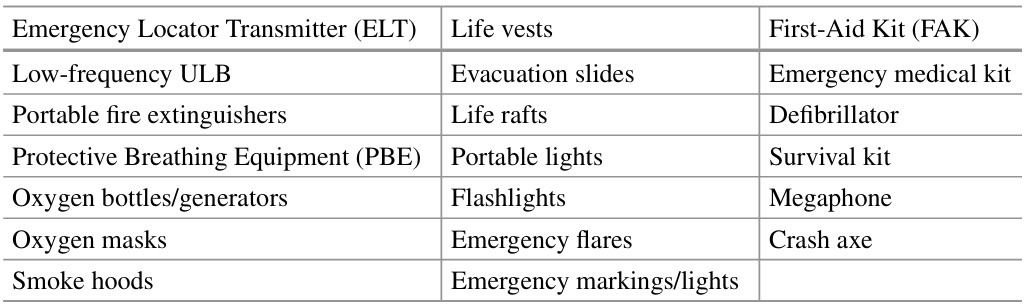
Each of these items plays a role in ensuring readiness—whether for an inflight decompression, an emergency landing, or simply delivering a safe and secure passenger experience.
The Role of the Preflight Check
A vital process ensuring the serviceability and presence of Emergency Equipment is the Preflight Check. This inspection is carried out before each flight and confirms that the aircraft is in a fit condition for operation.
The Preflight Check includes a walk-around inspection, including the verification of emergency equipment against the operator’s Emergency Equipment Layout (EEL), checking for presence, condition, and signs of damage or leakage.
The Preflight Check also covers the review of aircraft records, control of fluids and gases, and verification of removable items such as covers, locks, and blanks, as well as a surface inspection to ensure the aircraft is free from contamination or environmental hazards.
While some of these inspections are defined as maintenance when performed by certifying staff, others—such as the walk-around and emergency equipment check—may be delegated to trained flight crew, depending on national regulations and operator procedures.
Regardless of who performs the check, the pilot in command is ultimately responsible for ensuring that the Preflight Check is completed, the Emergency Equipment is fit for safe operation, and the aircraft is ready for safe flight.
Controlling Equipment Requirements
Emergency Equipment isn’t just "installed and forgotten." Operators must manage its serviceability, life limits, and inspections through documented and controlled processes.
Some examples of control methods include:
Hard Time: the item is replaced or overhauled at a strict interval, regardless of condition. For example, a life vest may be removed from service and replaced before its expiration date, regardless of condition.
Inspection Surveys: inspections are done at intervals, and action is taken based on the outcome (e.g., if the item won’t last until the next check, it's replaced).
So, while both control methods have a schedule, the control approach is different.
These requirements are guided by the Instructions for Continued Airworthiness (ICA) provided by the aircraft and equipment manufacturers, as well as by any modifications introduced. Operators must also consider regulatory requirements when integrating these checks into their Aircraft Maintenance Program.
The Maintenance Review Board (MRB) process and the resulting Maintenance Review Board Report (MRBR) primarily cover type-certificated aircraft and their original (OEM) equipment. However, the same principles can also apply to additional or modified equipment—but only if it is integrated into the aircraft through an approved design change, such as a Service Bulletin (SB) by the Type Certificate Holder, which provides recommended maintenance or modifications, or a Supplemental Type Certificate (STC), which authorizes modifications to the aircraft design. Additionally, the equipment’s supplemental ICA must be formally accepted.
A Lean Approach to Compliance and Readiness
From a lean perspective, managing Emergency Equipment offers a clear opportunity to apply smart, efficient systems without compromising safety. This means:
Standardizing inspections to reduce variability and error
Digitizing checklists to increase visibility and traceability
Eliminating redundant steps that don’t add value
Training flight crews to confidently perform delegated checks under clear, risk-based rules
Automating routine controls (e.g., expiry tracking, inspection alerts) to ensure timely action and reduce manual workload)
One practical technology enabling this last point is Radio-Frequency Identification (RFID) — a wireless tracking system that uses smart labels (similar to barcodes) to tag individual items. When scanned by an RFID reader, the system instantly confirms the presence and expiry status of Emergency Equipment without manual checking. RFID tags can be passive (powered by the scanner’s radio waves) or active (battery-powered).
While RFID does not assess the physical condition of equipment—which still requires a hands-on Preflight Check—it significantly reduces inspection times and helps optimize asset lifecycle management.
RFID tags can degrade over time due to thermal cycles, pressure cycles, and chemical exposure, which may affect their readability and reliability. Therefore, they may have a service life or “expiration” and may require replacement or periodic verification. When using RFID as an alternative or supplement to traditional maintenance inspections, these limitations should be carefully considered and documented in the Aircraft Maintenance Program (AMP).
Final Thoughts
The integrity of Emergency Equipment isn’t just about compliance—it’s about saving lives when every second counts. At The Lean Airline, we encourage operators to treat this category of equipment with the seriousness it deserves, while also seeking ways to improve processes, and foster shared responsibility between crew and maintenance teams.
By combining regulatory understanding with lean thinking, the industry can continue to deliver flights that are not only efficient but uncompromisingly safe.
Author
David Lapesa Barrera is the founder of The Lean Airline® and author of The Lean Airline: Flight Excellence and Aircraft Maintenance Programs. His work focuses on lean management, operational excellence, and continuing airworthiness.