- Oct 16, 2024
You Don’t Know the Way Without a Map! The Importance of Business Process Mapping
- David Lapesa Barrera
In the aviation industry, where every second counts and safety is non-negotiable, understanding your business processes is crucial. Business Process Mapping (BPM) is the secret weapon that can help aviation organizations visualize their workflows, streamline operations, and identify opportunities for improvement.
By making processes visible, BPM enables teams to better understand how activities interact across departments and where inefficiencies may occur.
What is Business Process Mapping?
Business Process Mapping is a graphical representation of workflows within an organization. Unlike complex manuals and standard operating procedures (SOPs), which can often be dense and hard to navigate, BPM provides a clear, visual overview of how activities are interconnected. This visual approach allows for easier identification of waste, inefficiencies, and bottlenecks, ultimately leading to enhanced operations and safety.
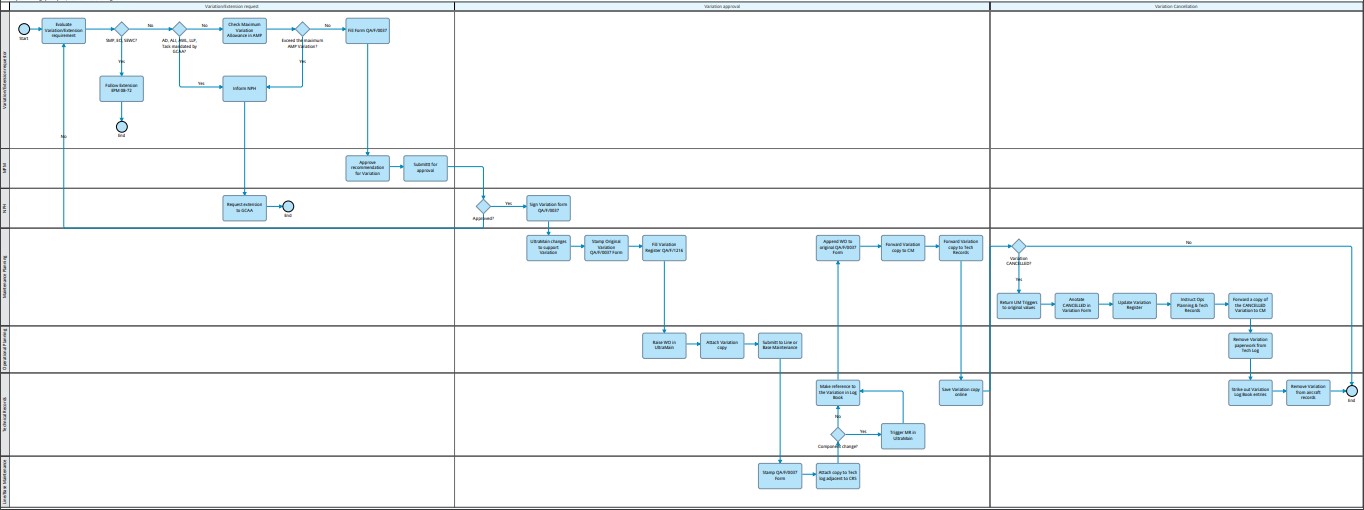
Example: Mapping an Airline Maintenance Planning Process
To illustrate the value of Business Process Mapping, consider an airline maintenance planning process. This process typically involves multiple stakeholders, including maintenance planning, engineering, logistics, and line maintenance.
By mapping the process, organizations can visualize how maintenance tasks are scheduled, how spare parts are requested and delivered, and how information flows between departments. This often reveals bottlenecks, communication gaps, or unnecessary steps that may not be obvious when reviewing procedures alone.
Once these inefficiencies are identified, the process can be redesigned to improve coordination, reduce delays, and ensure maintenance activities are carried out more efficiently.
Why Choose Business Process Mapping?
When organizations visualize their processes, they gain a clearer understanding of how work is performed and where improvements can be made. Business Process Mapping provides several important benefits.
Clarity and Understanding: BPM simplifies complex processes, making it easier for team members to grasp their roles and responsibilities. A clear map aids in effective communication and collaboration.
Efficiency and Optimization: By identifying waste and inefficiencies, BPM helps organizations streamline operations. The focus shifts from merely following procedures to actively improving workflows.
Enhanced Safety Compliance: With BPM, airlines can ensure that safety-related processes are not just documented but also adhered to, reducing risks and improving safety outcomes.
Engagement and Ownership: Involving employees in the mapping process fosters a sense of ownership and commitment to continuous improvement. Engaged employees are more likely to contribute positively to the organization’s success.
Knowledge Transfer: BPM serves as an excellent training tool for new employees, allowing them to quickly understand complex workflows, thus shortening onboarding time and ensuring consistency in operations.
How to Get Started with BPM
Implementing Business Process Mapping typically involves several steps that help organizations understand their current operations and identify opportunities for improvement.
Map the Current State: Begin by visualizing the existing workflows within your organization.
Identify Waste: Analyze the process to pinpoint inefficiencies and their root causes.
Redesign for Improvement: Rework the process to achieve an ideal state.
Implement Changes: Redraw the optimized process map and implement the changes.
Monitor and Adjust: Continuously evaluate the process and make necessary adjustments for ongoing improvement.
Conclusion
Business Process Mapping helps aviation organizations make complex operations visible and understandable. By clearly visualizing workflows, teams can identify inefficiencies, improve coordination, and support safer and more efficient operations.
Learn more about Business Process Mapping and process analysis techniques →
Author
David Lapesa Barrera is the founder of The Lean Airline® and author of The Lean Airline: Flight Excellence and Aircraft Maintenance Programs. His work focuses on lean management, operational excellence, and continuing airworthiness.