- Jul 1, 2025
TWA Flight 800: Tragedy Transformed into Fuel Tank Safety
- David Lapesa Barrera
On July 17, 1996, TWA Flight 800, a Boeing 747 en route from John F. Kennedy International Airport in New York to Charles De Gaulle International Airport in Paris, tragically exploded and crashed into the Atlantic Ocean shortly after takeoff. All 230 people onboard lost their lives.
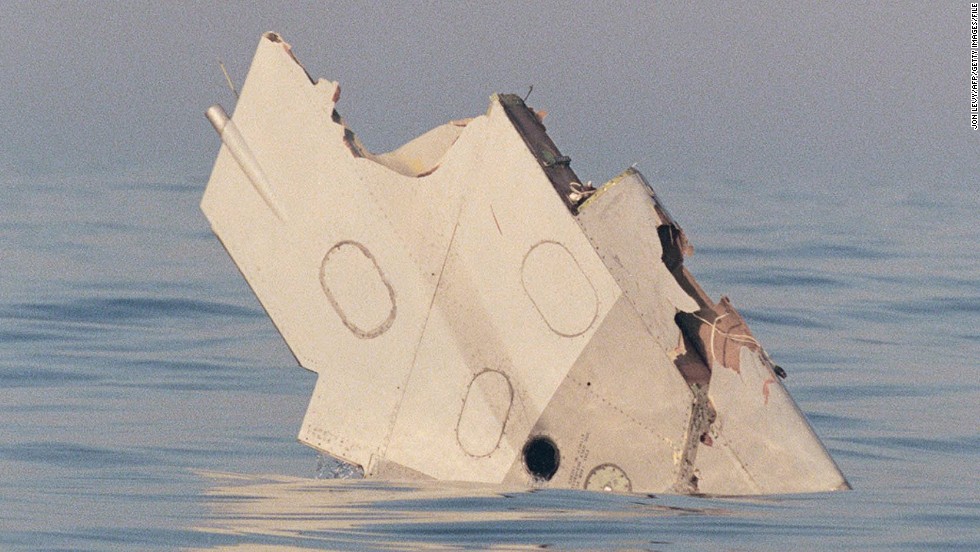
Figure- A piece of TWA800 debris floats in the Atlantic Ocean.
Investigation and Findings
What followed was one of the most extensive investigations in aviation history. Over 95% of the wreckage was recovered and reconstructed by the U.S. National Transportation Safety Board (NTSB). After years of thorough examination, the investigation concluded that the probable cause of the accident was the explosion of the aircraft’s center wing fuel tank (CWT), caused by the ignition of a flammable fuel/air mixture.
The configuration of the aircraft played a significant role in this accident. The air conditioning packs—located directly beneath the CWT—operated at high temperatures, transferring heat into the tank. This heat increased the temperature of the remaining fuel and produced flammable vapors. While the exact ignition source was never conclusively identified, investigators found that a short circuit likely allowed excessive voltage to enter the tank through the electrical wiring associated with the fuel quantity indication system.
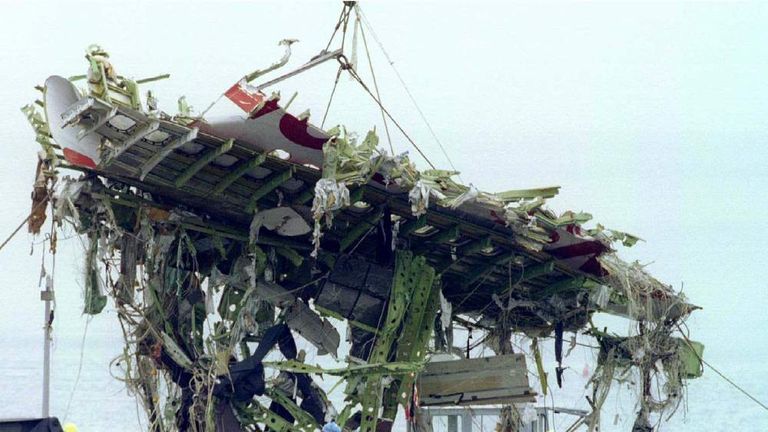
Crash Section of TWA 800.
Similar Incidents Reveal Systemic Risk
This was not the first such event. A similar explosion had occurred in May 1990 when Philippine Airlines Flight 143, a Boeing 737, suffered a CWT explosion on the ground, resulting in the deaths of 8 out of 119 occupants. Another incident occurred in March 2001 when a Thai Airways Boeing 737 exploded while parked at Bangkok’s Don Mueang Airport. These incidents confirmed a disturbing trend: a systemic risk within aircraft fuel tank systems.
Industry Initiatives and Programs
During the NTSB investigation, many efforts and initiatives were undertaken in the industry in response to the disaster; it worths to mention the Aircraft Fuel System Safety Program (AFSSP), a voluntary program that gathered information about the overall integrity of the design and maintenance of the fuel systems throughout the life of the aircraft performing inspections of the world fleet.
The Federal Aviation Administration (FAA) established two Aviation Rulemaking Advisory Committees (ARACs): one focused on Fuel Tank Flammability Reduction, and another on Flammability Reduction Systems (FRS). These committees brought together experts from the U.S., Europe, Canada, and Brazil to develop strategies for reducing or eliminating both fuel-air vapor and potential ignition sources in fuel tanks.
The NTSB's final report included a critical recommendation: reduce both fuel tank flammability and ignition sources. In response, the FAA issued guidance through Advisory Circulars AC 25.981-1B and AC 25.981-2. These addressed the prevention of ignition sources and ways to minimize flammability in fuel tanks.
Special Federal Aviation Regulation (SFAR) 88
Most notably, the FAA issued Special Federal Aviation Regulation (SFAR) 88. Based on findings from the NTSB, ARACs, and industry input, SFAR 88 mandated manufacturers to enhance maintenance programs to preserve design features that prevent ignition in fuel tanks. This led to the introduction of two crucial safety requirements:
Airworthiness Limitation Inspections (ALI)
Critical Design Configuration Control Limitations (CDCCL)
For aircraft with a higher risk of fuel tank flammability, SFAR 88 also required installing safety systems to reduce that risk. These include either a Flammability Reduction System (FRS)—designed to lower the flammability exposure of a fuel tank by reducing oxygen levels or fuel vapor concentration, such as inert gas or nitrogen inerting—or an Ignition Mitigation Means (IMM)—intended to prevent overpressure in the fuel tank following ignition of fuel or vapor, examples include materials like polyurethane foam. This retrofit requirement applied to aircraft built since 1992.
European Response
Europe also responded. The Joint Aviation Authorities (JAA)—predecessor to the European Union Aviation Safety Agency (EASA)—issued INT/POL 25/12, requesting national authorities to conduct comprehensive safety reviews of fuel systems in line with SFAR 88. Eventually, EASA required FRS installation on new aircraft with high flammability exposure beginning in 2012, but did not mandate retrofitting of the existing fleet.
Legacy of TWA Flight 800
The tragic loss of TWA Flight 800 served as a wake-up call to the global aviation community. The resulting regulatory changes and design requirements continue to shape aircraft safety standards today.
In our next article, we’ll explore what makes a fuel tank flammable and the regulatory frameworks that define Fuel Airworthiness Limitations (FAL), including Critical Design Configuration Control Limitations (CDCCL).
Learn more about Fuel Airworthiness Limitations →
Author
David Lapesa Barrera is the founder of The Lean Airline® and author of The Lean Airline: Flight Excellence and Aircraft Maintenance Programs. His work focuses on lean management, operational excellence, and continuing airworthiness.