- Jan 22, 2025
Catchball: It’s Like Ping Pong, But with Goals!
- David Lapesa Barrera
In a previous article, we explored the Hoshin Kanri, a structured approach to turning long-term organizational goals into actionable plans. To be effective, these goals must be communicated and refined through ongoing dialogue at every level of the organization: this is where the Catchball process comes into play.
Rather than simply passing down objectives from top to bottom, Catchball creates an interactive process that engages employees at all levels. It’s a two-way street, where feedback is not only encouraged but expected, allowing goals to be continuously refined, clarified, and aligned with the practical realities of everyday work.
What is Catchball?
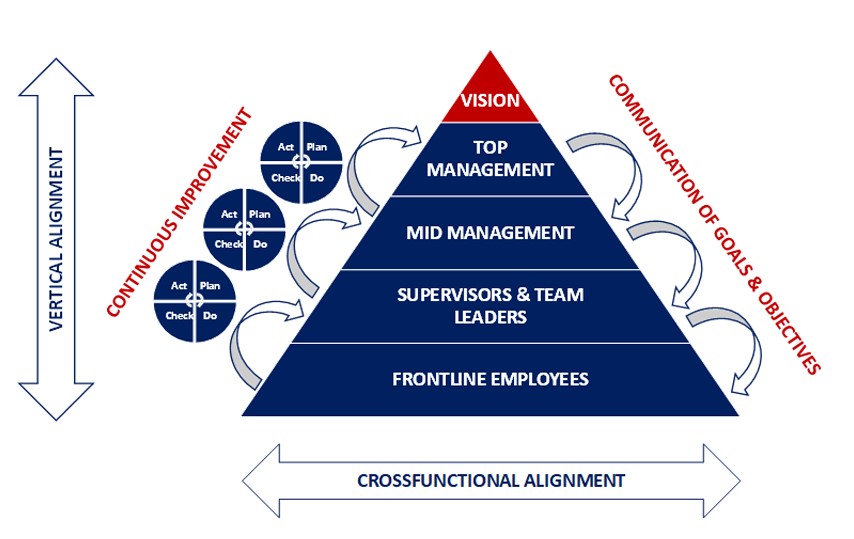
Catchball is a feedback loop designed to involve everyone in goal-setting and execution. When top management communicates the long-term vision and strategic objectives, Catchball ensures these goals don’t remain stagnant or abstract. Instead, employees at all levels provide input, ask questions, and contribute insights. This iterative communication process allows the organization’s goals to evolve, making them more realistic and relevant to operational challenges.
The process is called "Catchball" because, much like a game of catch, the goals and ideas are “thrown” back and forth between all management levels and employees. Instead of merely dictating goals, leadership actively engages their teams in shaping how to achieve the organization’s strategic vision. This participatory approach is a cornerstone of Lean leadership, which thrives on transparency, collaboration, and engagement.
How Catchball Works
Top-Down Communication: Catchball begins when leadership communicates the long-term vision and goals. These may include ambitious objectives, such as improving operational efficiency or achieving sustainability targets. However, instead of simply issuing directives, leadership sets the stage for open communication by inviting feedback. For example, senior leaders may share a vision like “Become the global leader in sustainable aviation by 2030,” then break it down into specific, measurable goals. Think of using town halls, visual presentations, or infographics to share the goals clearly and motivate teams.
Feedback Loop: Once goals are presented, it’s time for the real magic to happen. Middle management, team leaders, and frontline employees are encouraged to ask questions and offer suggestions. This feedback loop allows goals to evolve and ensures they are relevant to daily operations. Employees who are closest to the work often have valuable insights that leadership may overlook, making the goals more practical. Think of structured feedback sessions, suggestion boxes, or online forums where employees can contribute their insights.
Collaborative Goal Setting: Feedback is not just about approval but about co-developing goals. By participating in the goal-setting process, employees gain a sense of ownership, increasing their engagement and commitment to achieving those goals. This reduces resistance to change and fosters a culture of accountability. Think of brainstorming workshops, collaborative meetings, or facilitated discussions where teams align their objectives with broader company strategies.
Ongoing Dialogue: The Catchball process doesn’t stop after a single round of feedback. It’s a continuous cycle, with regular check-ins and adjustments that keep the organization agile. This ongoing dialogue ensures goals remain aligned with the organization’s evolving needs. Think of recurring updates through newsletters, intranet postings, or regular team briefings to ensure alignment and adaptability.
Why Catchball Matters
Alignment Across All Levels: Catchball is a cornerstone of the Hoshin Kanri process, ensuring that organizational goals align with operational realities. Without feedback loops, objectives risk becoming disconnected from the challenges employees face daily. Catchball bridges this gap, creating alignment from leadership to the frontline and fostering a unified direction.
Increased Engagement and Commitment: Engagement improves when employees are included in the goal-setting process. Catchball creates a sense of ownership, making employees more likely to commit to the goals. This commitment leads to a culture of accountability, where everyone feels responsible for achieving organizational success.
Collaboration and Innovation: Catchball promotes collaboration and innovation by encouraging employees to share ideas. This continuous exchange leads to better decision-making and new opportunities for improvement.
Continuous Improvement: Catchball drives continuous improvement. By regularly reviewing and refining goals, organizations remain adaptable and able to respond to changes in the market or internal operations. This adaptability is key to long-term success.
Implementing Catchball in Your Organization
Incorporating Catchball within Hoshin Kanri requires a commitment to transparency and employee engagement. Organizations must foster a culture of communication and collaboration where every voice is valued. The payoff? A more aligned, engaged, and innovative workforce pulling together toward a shared vision.
Learn how Lean leaders align strategy and execution →
Author
David Lapesa Barrera is the founder of The Lean Airline® and author of The Lean Airline: Flight Excellence and Aircraft Maintenance Programs. His work focuses on lean management, operational excellence, and continuing airworthiness.