- Jan 13
Configuration Management: Ensuring Compliance Throughout an Aircraft’s Lifecycle
- David Lapesa Barrera
Aircraft Configuration Management is a fundamental process that ensures an aircraft and its components are fully aligned with operational, regulatory, and contractual requirements. It guarantees that every part installed on an aircraft matches the approved type design, type design changes, mandatory requirements, such as Airworthiness Directives (ADs), the Aircraft Maintenance Program (AMP), and any leasing, warranty, or repair obligations.
Managing the Configuration
Configuration Management relies on clearly defined procedures to track the aircraft’s configuration tree—a structured, hierarchical record of all installed components, showing how each part relates to the approved build standard. A critical aspect is the use of coding conventions, typically based on ATA chapters. These conventions enable unique identification of each component and its connection to relevant documentation. By using Part Numbers and Serial Numbers, operators maintain full traceability and effectively manage reliability data.
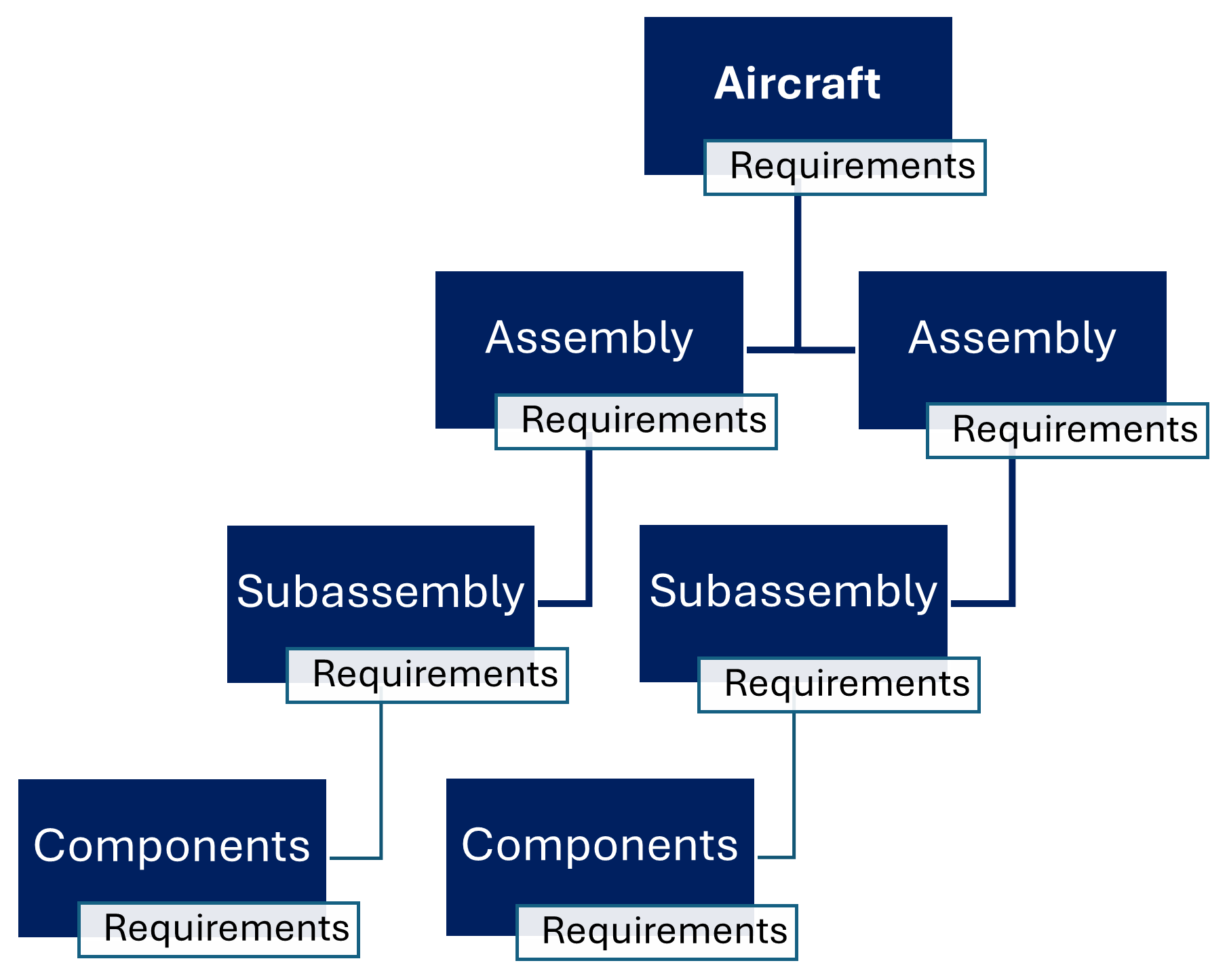
Figure - Configuration Tree.
The complexity of these procedures depends on the size of the organization. Smaller operators may rely on basic configuration trees and simple procedures, while larger operators develop detailed and structured trees with more complex workflows.
Operators must define procedures to identify, document, and communicate configuration changes to all relevant stakeholders. Internal stakeholders typically include engineering and maintenance personnel responsible for implementing and tracking configuration changes and ensuring the approved configuration is maintained, as well as operations personnel if configuration changes affect operations. External stakeholders include Design Approval Holders (DAHs) or manufacturers, when updates to instructions for Continuing Airworthiness are required following a configuration change, for example, after the embodiment of a modification.
Building the Configuration Standard
The basic aircraft configuration is defined by the approved documentation provided by the Design Approval Holders (DAHs). It is complemented by an exhaustive evaluation of other sources of information and the experience of the operator with the aircraft and the component types. The following items should be taken into consideration:
Conformity documentation (delivery documents)
Aircraft/Component Illustrated Part Catalogues (IPC)
Aircraft Maintenance Program (AMP): MRBR, ALS, RVSM, EDTO (ETOPS), etc.
Modifications/Repairs
Regulatory requirements, including Airworthiness Directives (ADs)
Operator's in-service experience (Reliability Program)
Leasing/Warranty/Repair/Pooling agreements (*)
Removable Structural Components (RSC) (**)
(*) Leasing, warranty, repair, and pooling agreements may impose certain return restrictions, for example, return under specified standards, modifications, repairs, or vendor recommendations.
(**) RSC procedures may require the addition of items to the configuration tree.
By integrating these sources, operators ensure their configuration standards reflect both regulatory compliance and operational experience, providing a complete and accurate representation of the aircraft and its components.
Fleet-Level Considerations
For airlines operating large fleets, establishing a common build standard is highly beneficial. When deviations exist, creating sub-fleets—often based on engine type—helps streamline maintenance and inventory management. Sub-fleets allow operators to assign specific aircraft to particular bases, simplify maintenance planning, and reduce inventory costs.
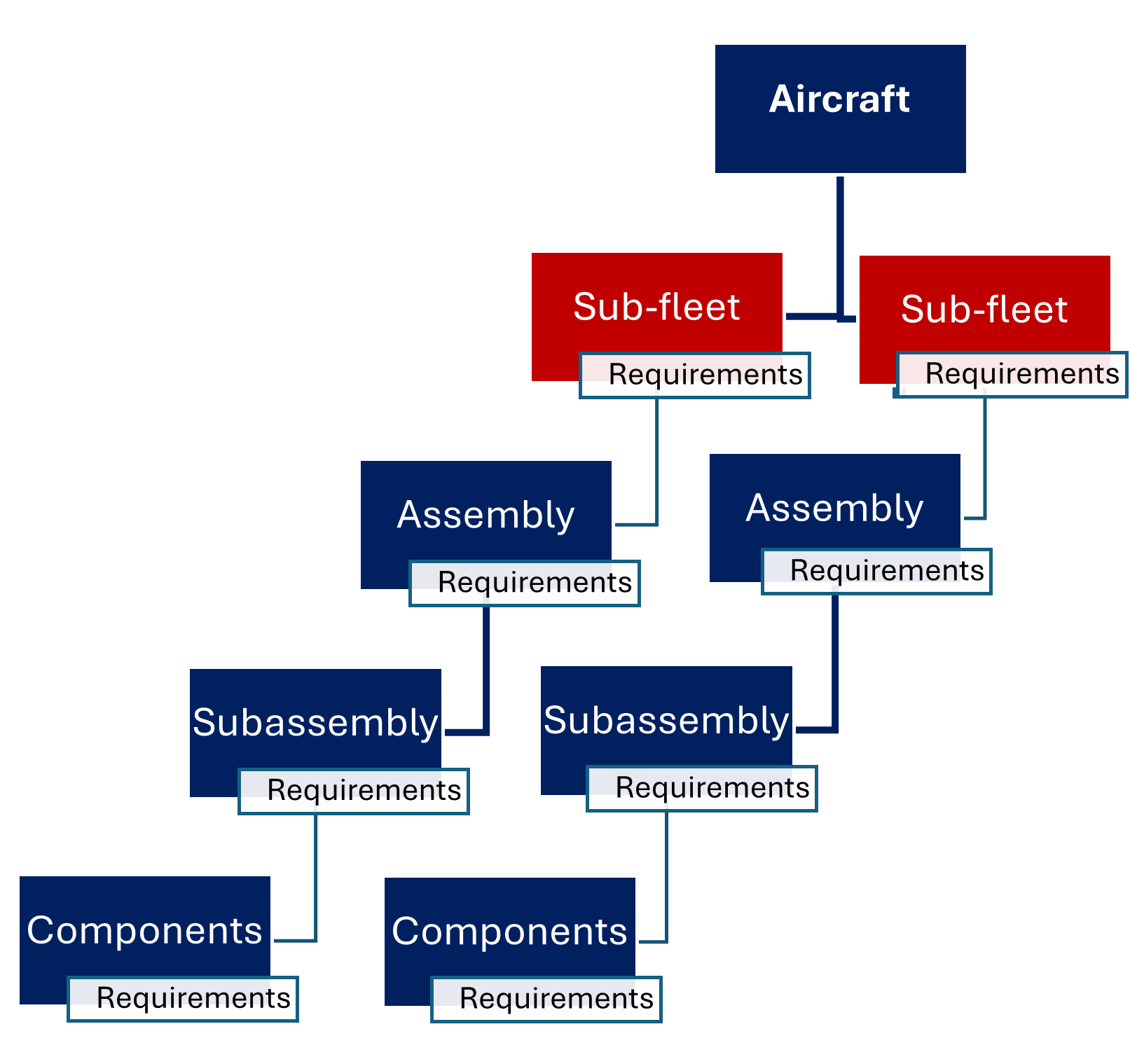
Sub-Fleet Configuration Trees.
Software Components and LSAPs
Loadable Software Aircraft Parts (LSAPs) require the same configuration control as physical components. Their installation, activation, and documentation must be fully managed to maintain traceability and compliance.
The Value of Effective Configuration Management
Effective Aircraft Configuration Management ensures that all installed components remain consistent with the approved type design and changes, regulatory requirements, Aircraft Maintenance Program, and contractual obligations. By using structured procedures, (more or less complex) configuration trees, and traceable identifiers, operators can document and communicate changes, maintain compliance, and support operational decision-making, including fleet standardization and sub-fleet management.
Learn how aircraft configuration is controlled throughout its lifecycle →
Author
David Lapesa Barrera is the founder of The Lean Airline® and author of The Lean Airline: Flight Excellence and Aircraft Maintenance Programs. His work focuses on lean management, operational excellence, and continuing airworthiness.