- Apr 22, 2025
The Aircraft Component Repair Cycle: From Removal to Airworthy Return to Service
- David Lapesa Barrera
Aircraft maintenance operations rely heavily on the effective management of components throughout their lifecycle. From removal and repair to reinstallation, every step must be carefully controlled to ensure airworthiness, regulatory compliance, and operational reliability.
A key element within this process is the Component Repair Cycle—the process by which components are removed from service, repaired, and returned to serviceable condition. This cycle is essential for ensuring aircraft airworthiness, reliability and preventing critical failures during flight.
The Component Repair Cycle
The Component Repair Cycle begins when a component is deemed unserviceable. Components may be removed from the aircraft for several reasons: expiration of their life limits, non-compliance with mandatory requirements, visible defects, or an incident/accident affecting its airworthiness.
Once the unserviceable component is removed, it is properly tagged to prevent accidental use. Components that cannot be repaired are classified as unsalvageable and are discarded or mutilated in a controlled manner. However, repairable components enter the component repair cycle, which involves several stages:
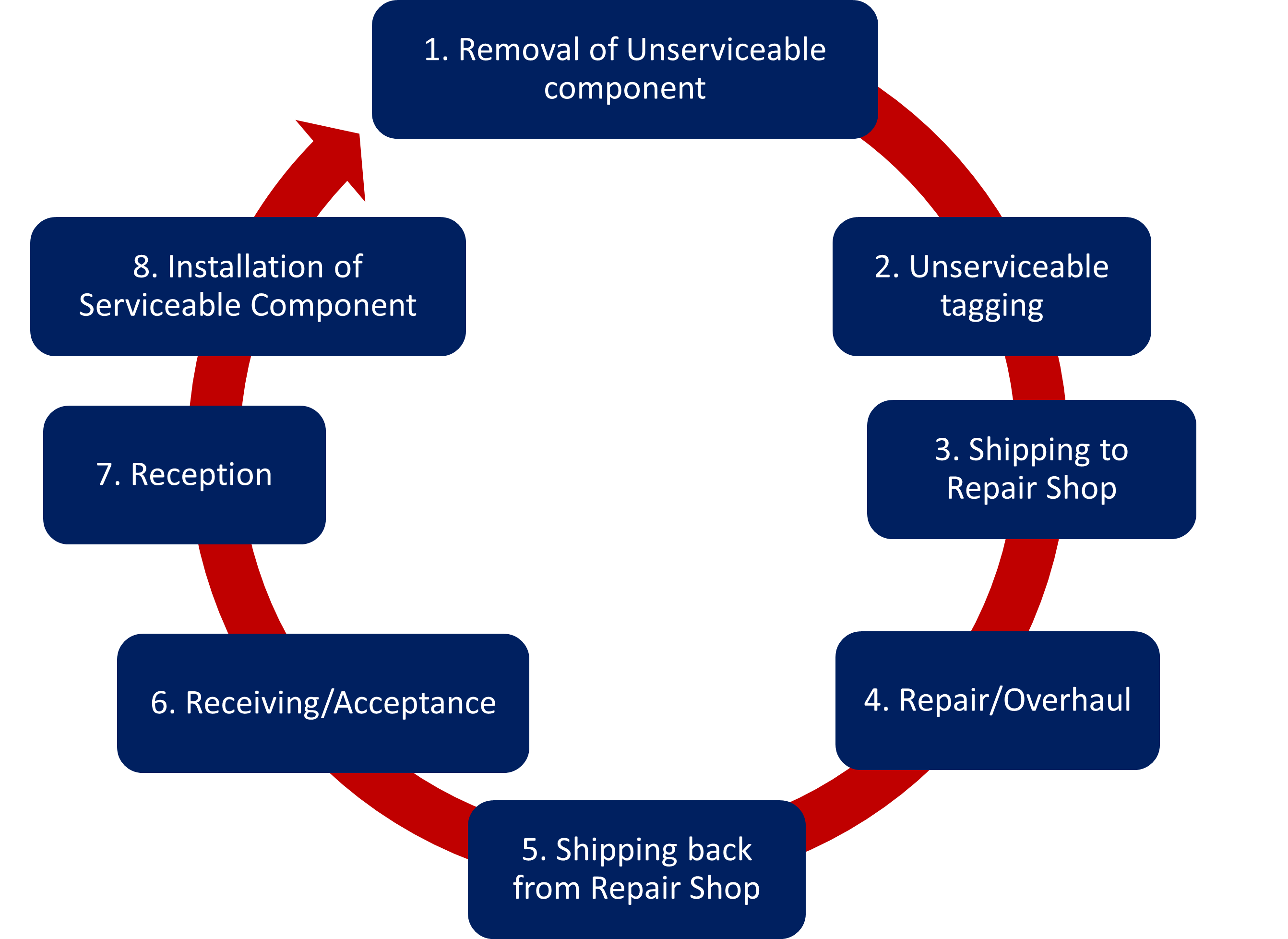
Each stage in this cycle is crucial for ensuring the component is restored to a serviceable condition and is ready for installation back onto the aircraft.
Importance of Documentation and Release Certificates
A key aspect of the Component Repair Cycle is proper documentation. Components returning to service must be accompanied by an Authorized Release Certificate. This could include an EASA Form 1, FAA Form 8130-3, or an equivalent document, which certifies that the component has been properly maintained and is ready for installation.
When components undergo maintenance, repair, or overhaul, the release certificate must provide the following details:
Component Identification (Part Number, Serial Number, and Description)
Component Status (New, Overhauled, Inspected, Tested, Repaired, etc.)
Maintenance Data used during the repair process
Compliance with Airworthiness Directives (ADs) and Service Bulletins (SBs)
Modifications/Repairs performed
Life-Limited Parts Status
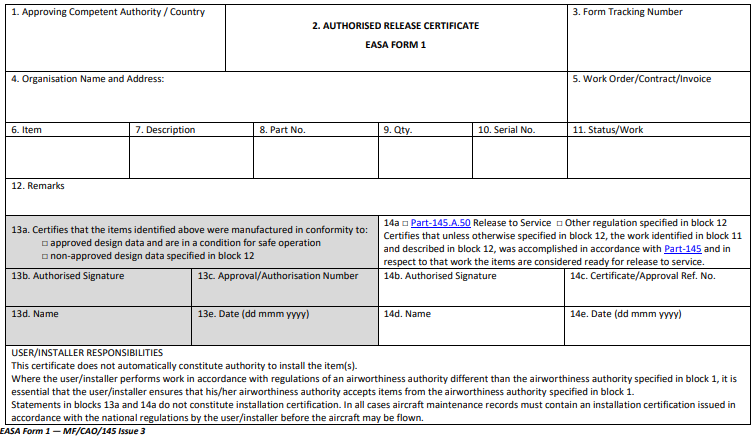
Additionally, in cases of dual regulatory environments (like the EU and the US), components can be approved for return to service in either jurisdiction if they are accompanied by a Dual Release certificate, ensuring both regulatory bodies recognize the component's airworthiness.
Note: the procedures to fill an EASA Form 1 are detailed in EASA Part 21 Appendix I to Annex I (for production organizations) and Part M Appendix II (for maintenance organizations). The procedure to fill a FAA Form 8130-3 is detailed in the FAA Order 8130.21G.
Ensuring Conformance with Standards
All materials used in aircraft components, such as standard parts, raw materials, or consumables, must be accompanied by conformity documentation. This could be in the form of a Certificate of Conformance (CoC) or conformity statement.
These certificates ensure that the parts used comply with industry standards and are safe for installation on aircraft. However, it's important to note that raw/consumable materials are not typically issued EASA/FAA forms but must meet the required quality standards.
For standard parts, an EASA Form 1 or FAA Form 8130-3 may be issued in lieu of a CoC, but should not be issued for raw/consumable material.
Dealing with Suspected Unapproved Parts (SUP)
Another critical component of maintaining airworthiness is addressing Suspected Unapproved Parts (SUP). These parts may not meet the required standards for safe use in the aviation system: lack of proper documentation, defective parts rejected during production, parts improperly maintained, military parts that do not meet the civil certification requirements, supplier parts without the authorization of the approved manufacturer, parts that have reached a design life limit, parts that have been damaged beyond repair, or directly counterfeit parts.
Red flags for identifying SUP include:
Lack of proper documentation
Suspiciously low prices or delivery times
Unknown or unverified distributors
Tampered packaging or part identification
SUPs pose a serious risk to airworthiness and must not be installed on aircraft. If any SUPs are suspected, they must be reported to the relevant regulatory authorities, such as EASA or FAA, for further investigation. Once confirmed as unapproved, these parts are removed from the aviation system to ensure safety.
Final Thoughts
The Component Repair Cycle is a critical process that ensures aircraft safety and reliability. By following best practices for maintenance, proper documentation, and compliance with regulatory requirements, airlines and maintenance organizations can significantly reduce the risk of component failures and improve overall operational safety.
From ensuring proper certification to vigilant monitoring for Suspected Unapproved Parts, maintaining robust standards throughout the Component Repair Cycle, including the acceptance of components, can prevent potentially catastrophic failures and keep aircraft flying safely.
Learn more about component maintenance programs →
Author
David Lapesa Barrera is the founder of The Lean Airline® and author of The Lean Airline: Flight Excellence and Aircraft Maintenance Programs. His work focuses on lean management, operational excellence, and continuing airworthiness.